
September 12, 2026 Sources: Reported via Benzinga and IBTimes Australia
Lead Story
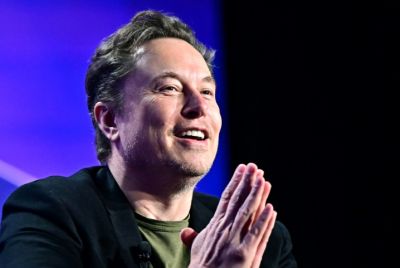
Tesla and xAI CEO Elon Musk has weighed in on the accelerating debate over artificial intelligence and software engineering, declaring technology to be the “most important advantage” in war. Musk’s remarks came in response to veteran programmer and Keen Technologies CEO John Carmack, who posted a widely discussed critique suggesting that traditional, manual hand-coding is rapidly becoming obsolete as AI tools evolve.
By elevating Carmack’s programming commentary into the realm of warfare, Musk reframed the ongoing software engineering disruption as a broader geopolitical and strategic competition, signaling that automated code synthesis and AI capabilities are critical national defense assets rather than purely commercial tooling.
Key Highlights & Breakdown
1. John Carmack’s Martial Arts Analogy: From ‘-Jitsu’ to ‘-Do’
In a post on X, John Carmack—co-creator of landmark titles like Doom and Quake and founder of AI startup Keen Technologies—compared the transition of software development to the post-WWII evolution of martial arts:
-
Combat Necessity vs. Personal Discipline: In Japanese martial arts terminology, -jitsu denotes techniques created for practical battlefield survival, while -do represents a path of personal discipline and athletic pursuit.
-
The “Codo” Shift: Carmack stated:
“AI is making many other programming skills much less critical. We aren’t there yet, but carefully writing code completely by hand is moving from a -jitsu to a -do. Code-do? Codo?”
-
The Warning to Engineers: Carmack cautioned software developers against clinging strictly to manual coding habits, warning against becoming “the out of touch Kung Fu master… that gets mauled by an amateur MMA fighter.”

2. Musk Elevates the Stakes
Musk replied to Carmack by asserting that technology serves as the decisive differentiator in armed conflict. The response aligns with Musk’s broader positioning across xAI, Tesla’s autonomous computing pipelines, and SpaceX’s defense-adjacent capabilities, emphasizing that the speed of technological iteration directly determines strategic supremacy.
3. Broader Industry Perspectives
The exchange highlights a sharp divide among prominent figures across the technology landscape regarding how quickly and thoroughly AI will displace human software engineers:
-
Rapid Adoption:
-
Alphabet: CEO Sundar Pichai previously disclosed that roughly 75% of all new code at Google is now AI-generated.
-
OpenAI: President Greg Brockman reported earlier that the proportion of developer code written by AI tools surged from 20% to 80% within a single month.
-
Anthropic: CEO Dario Amodei indicated that company engineers have largely ceased writing code by hand, projecting that AI could take over the majority of software engineering workloads in 6 to 12 months.
-
Microsoft AI: CEO Mustafa Suleyman projected that most professional tasks could see full automation within 12 to 18 months.
-
-
Industry Skepticism:
-
Minecraft Creator Markus Persson (“Notch”): Pushed back against the narrative, calling AI-assisted coding “an incredibly bad idea” that prioritizes raw typing velocity over sound underlying architecture and logical reasoning.
-
Newsroom Summary & Editorial Angles
-
Workforce Impact: Engineering leaders are increasingly advising developers to pivot from syntax proficiency to systems architecture, prompt verification, and problem formulation.
-
Geopolitical & Security Implications: Autonomous code generation, vulnerability patching, and AI-accelerated deployment are increasingly viewed through the lens of cyber defense, defense procurement, and sovereign tech competitiveness.